Demystifying Qubits and Quantum Gates: The Building Blocks of Quantum Supremacy (By Gemini)
- Leke

- Mar 29, 2024
- 1 min read
The power of quantum computers lies in their unique architecture. Unlike classical computers that use bits (0s or 1s), quantum computers utilize qubits. Qubits can exist in a state known as superposition, where they are both 0 and 1 simultaneously. This unlocks the potential for parallel processing on a massive scale.
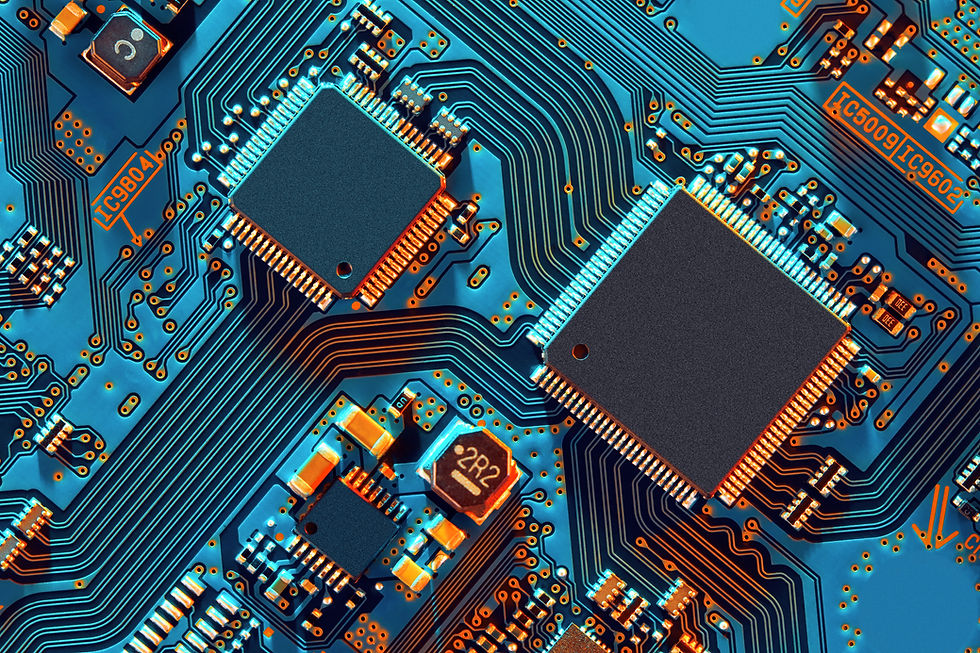
But qubits alone aren't enough. To manipulate these qubits and perform calculations, we need quantum gates. These gates act like instructions, controlling the qubits and directing the flow of information within the quantum computer.
Understanding qubits and quantum gates is essential to grasp the core principles of quantum computing. While the underlying physics can get complex, here's a simplified analogy:
Imagine a coin. In the classical world, the coin is either heads or tails. In the quantum world, the coin can be spinning in the air, representing both heads and tails at the same time. Quantum gates then act like forces that influence the coin's spin, ultimately determining the outcome.
As quantum computing matures, scientists are continuously developing new and more intricate quantum gates, paving the way for more powerful algorithms and groundbreaking applications.


Comments