Entity Design Theory and Industry 5.0 (Augmented with Chatgpt 5.5)
- Leke

- May 25
- 6 min read
Designing Enterprises That Can Think, Adapt, and Endure
For decades, organizations pursued industrial growth through scale, efficiency, optimization, and automation. The dominant strategic assumption was that the enterprises capable of operating faster, cheaper, and more efficiently than competitors would ultimately dominate the market. This industrial logic shaped the development of modern corporations, global operating models, enterprise technology systems, and the digital transformation era associated with Industry 4.0.
However, the current global environment has revealed the limitations of efficiency-centric enterprise design. Many organizations now possess advanced technological infrastructures, extensive data ecosystems, sophisticated analytics capabilities, and significant automation maturity, yet they continue to experience fragmentation, transformation fatigue, strategic incoherence, cultural instability, and systemic fragility.
The challenge is no longer merely technological. The challenge is architectural.
Organizations are not simply collections of business units, processes, or technologies. They are complex socio-technical entities operating within dynamic environments shaped by geopolitical volatility, economic uncertainty, artificial intelligence, environmental pressures, workforce transformation, and accelerating technological disruption.
This reality creates the need for a more advanced approach to organizational architecture and enterprise transformation. This is where Entity Design Theory becomes increasingly relevant.
What Is Entity Design Theory?
Entity Design Theory may be understood as an emerging transdisciplinary framework concerned with the intentional design of organizations as coherent, adaptive, and purposive socio-technical entities capable of surviving, learning, evolving, and creating value within dynamic environments.
The framework draws from multiple intellectual traditions, including:
systems thinking,
organizational theory,
cybernetics,
adaptive strategy,
complexity science,
socio-technical systems theory,
and institutional design.
Unlike traditional management approaches that primarily focus on isolated functions or operational efficiency, Entity Design Theory examines the organization as a unified living system composed of interconnected structures, relationships, capabilities, decision systems, and governing principles.
In this context, the central organizational question changes significantly.
The question is no longer simply:
“How do we optimize operations?”
The deeper question becomes:
“How do we design an entity capable of enduring complexity, adapting under pressure, and remaining coherent through transformation?”
This distinction is critical because organizations frequently achieve operational scale without achieving systemic coherence. Enterprises may improve local efficiencies while simultaneously weakening institutional resilience, strategic alignment, and long-term adaptability.
Entity Design Theory seeks to address these challenges at the architectural level.
The Relationship Between Entity Design Theory and Industry 5.0
Industry 4.0 primarily focused on:
digitization,
automation,
cyber-physical systems,
artificial intelligence,
cloud infrastructure,
robotics,
advanced analytics,
and industrial connectivity.
Its central objective was operational intelligence and technological efficiency.
While Industry 4.0 significantly transformed enterprise capability, it also exposed structural weaknesses within organizations. Many enterprises became technologically advanced but organizationally fragmented. Decision-making systems became overloaded with information while lacking coherence. Digital transformation initiatives frequently improved isolated functions without strengthening the organization as a unified entity.
Industry 5.0 emerges as a response to these limitations.
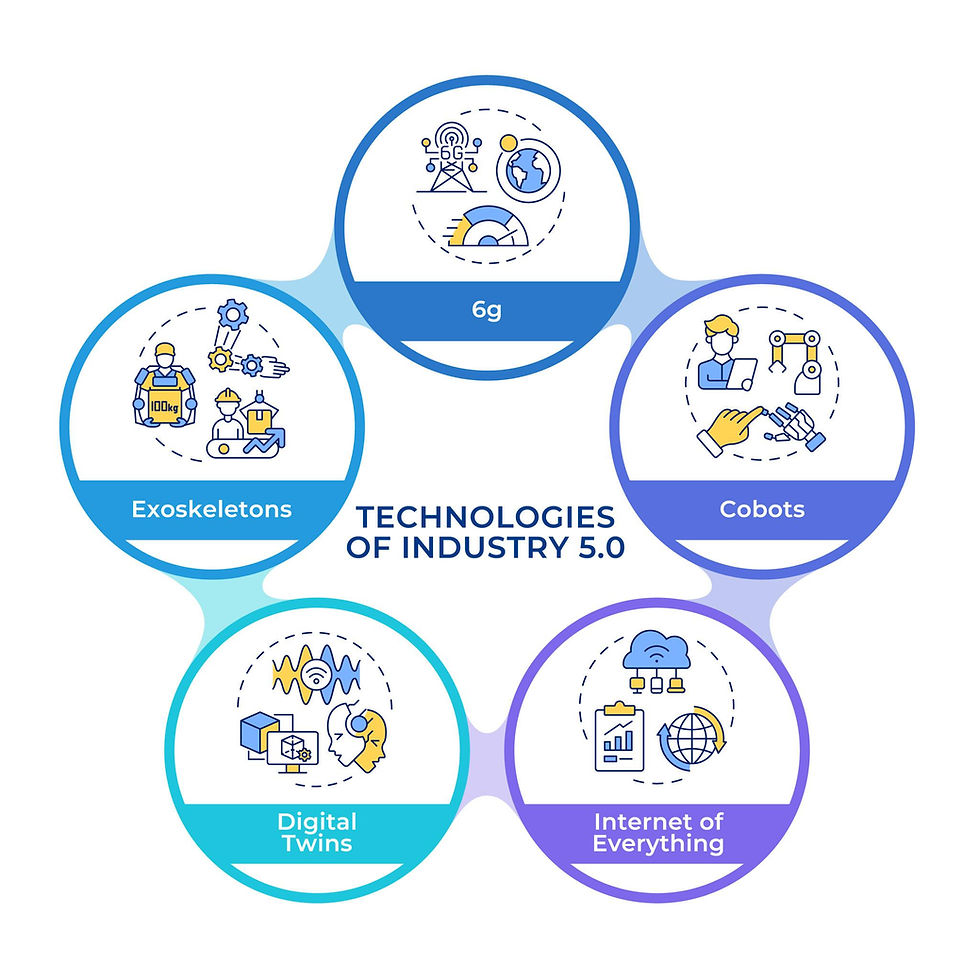
Industry 5.0 represents a strategic industrial paradigm emphasizing:
human-centricity,
resilience,
sustainability,
adaptive intelligence,
and collaborative relationships between humans and advanced technologies.
Importantly, Industry 5.0 is not anti-technology. Rather, it recognizes that long-term organizational success depends not only on technological sophistication, but also on:
organizational coherence,
ethical governance,
human creativity,
social integration,
and systemic adaptability.
Entity Design Theory provides the architectural lens required to support this transition.
The Seven Foundational Dimensions of an Enduring Enterprise Entity
A central principle within Entity Design Theory is that organizations survive and thrive when they are intentionally designed as coherent entities rather than fragmented operational systems.
An enduring enterprise typically possesses seven foundational characteristics.
1. Identity
An enduring organization possesses a clear and coherent identity.
The enterprise understands:
what it fundamentally represents,
what values govern its decisions,
what strategic future it seeks to create,
and what differentiates it from competing entities.
Identity creates organizational direction, strategic consistency, and cultural coherence. Without identity, enterprises drift reactively between trends, technologies, and external pressures.
Strong organizational identity enables enterprises to maintain continuity even during periods of disruption and transformation.
2. Memory
Organizations require institutional memory in order to learn and evolve effectively.
Institutional memory includes:
operational lessons,
accumulated expertise,
historical knowledge,
strategic intelligence,
cultural continuity,
and organizational learning systems.
Without memory, organizations repeatedly recreate avoidable mistakes and lose valuable knowledge during leadership transitions or transformation initiatives.
An intelligent enterprise must be capable of retaining, interpreting, and applying knowledge across time.
3. Boundaries
Healthy entities maintain intelligent boundaries with their surrounding environment.
This includes relationships with:
customers,
governments,
regulators,
investors,
suppliers,
strategic partners,
and broader ecosystems.
Boundaries allow organizations to manage risk, maintain strategic focus, and preserve operational coherence while still remaining adaptive and collaborative.
Without healthy boundaries, organizations become vulnerable to mission drift, governance breakdowns, and ecosystem instability.
4. Metabolism
An enterprise requires the ability to transform inputs into meaningful value.
Organizational metabolism includes the conversion of:
capital into capability,
data into intelligence,
talent into execution,
innovation into impact,
and strategy into measurable outcomes.
An enterprise with weak organizational metabolism consumes increasing resources while generating diminishing strategic value.
Strong metabolism enables organizations to sustain growth, operational resilience, and long-term competitiveness.
5. Adaptation
An enduring enterprise must continuously adapt to changing environmental conditions without losing coherence.
Adaptation includes the ability to:
detect external change,
learn rapidly,
redesign systems,
reallocate resources,
evolve capabilities,
and respond intelligently to disruption.
Organizations that cannot adapt eventually become structurally rigid and strategically obsolete.
Adaptation is therefore not optional. It is essential for long-term survivability.
6. Governance
Organizations require governance systems capable of maintaining accountability, coordination, and strategic integrity.
Governance includes:
decision rights,
accountability structures,
ethical oversight,
leadership alignment,
risk management,
and institutional legitimacy.
Without governance coherence, even technologically advanced enterprises become vulnerable to operational fragmentation, political dysfunction, and systemic instability.
Effective governance enables coordinated action across complex organizational environments.
7. Purpose
An enduring enterprise possesses a meaningful sense of purpose that extends beyond short-term financial extraction.
Purpose provides:
strategic direction,
motivational coherence,
stakeholder trust,
cultural alignment,
and societal legitimacy.
In the Industry 5.0 era, organizations are increasingly evaluated not only by financial performance, but also by their broader contribution to employees, communities, ecosystems, and society.
Purpose therefore becomes a strategic asset rather than merely a branding exercise.
The Enterprise as a Living System
Entity Design Theory approaches the organization as a living socio-technical system rather than a static operational machine.
Within this framework, enterprises possess structures analogous to biological systems.
The organizational sensory system detects:
market changes,
technological shifts,
customer behavior,
and strategic threats.
The cognitive system interprets information and generates strategic direction.
The nervous system enables coordination, communication, and operational synchronization across the enterprise.
The immune system protects against:
cyber threats,
governance failures,
operational risks,
and reputational damage.
The metabolic system converts resources into measurable value creation.
This systems-oriented perspective enables leaders to understand that transformation is not merely about isolated optimization initiatives. Transformation is fundamentally about strengthening the coherence, intelligence, resilience, and adaptability of the enterprise entity itself.
Why Entity Design Matters for Fortune 500 Organizations
Fortune 500 enterprises operate within environments characterized by extreme complexity.
These organizations must simultaneously manage:
global operations,
legacy systems,
AI integration,
regulatory pressure,
workforce transformation,
geopolitical instability,
sustainability expectations,
and rapid technological disruption.
Traditional transformation frameworks often address individual problems in isolation. However, isolated optimization frequently creates additional systemic fragmentation.
Entity Design Theory offers a more integrated approach.
It reframes enterprise transformation around a deeper strategic question:
“What kind of entity are we designing, and what kind of future is it intended to survive?”
This perspective shifts transformation away from disconnected initiatives and toward long-term enterprise coherence.
AI, Human Capability, and the Future of Industry 5.0
Artificial intelligence will likely become one of the defining organizational forces of the coming decade.
However, the strategic challenge is not simply deploying AI tools. The deeper challenge is integrating artificial intelligence into the enterprise entity in a way that strengthens:
human judgment,
organizational intelligence,
ethical governance,
and systemic resilience.
Industry 5.0 suggests that the highest-performing enterprises will not be those that automate most aggressively. They will be those that intelligently orchestrate relationships between:
humans,
machines,
governance systems,
data architectures,
and strategic decision-making structures.
Technology alone cannot create an enduring enterprise.
Long-term organizational success depends upon coherent entity design.
Conclusion
Industry 5.0 represents a significant evolution in industrial and organizational thinking.
The future enterprise will require more than operational efficiency. It will require:
resilience,
coherence,
adaptability,
ethical governance,
and intelligent human-machine collaboration.
Entity Design Theory provides a framework for understanding how organizations can be intentionally designed to survive and thrive within increasingly complex environments.
The enterprises that endure will not simply be the largest or most technologically advanced.
They will be the entities designed most coherently.


Comments