From Celebration to Controversy: Mega-Events in the Globalized Industry 4.0 Era [1996–2018] (Augmented with Chatgpt 5.2)
- Leke

- Feb 5
- 4 min read
If Barcelona represented the apex of strategic mega-event planning, the period from 1996 to 2018 marked its unraveling.
This was the age of Industry 4.0:
Globalization of capital and supply chains
Digital connectivity and data platforms
Hyper-competition between cities and nations
Rising inequality and institutional distrust
Mega-events expanded in scale and ambition — but their social license began to erode.
They became:
More expensive
More technologically sophisticated
More politically contested
And increasingly, more difficult to justify.
Atlanta 1996 to Beijing 2008: The Globalization Phase
During this period, mega-events shifted from national modernization projects to global positioning tools.
Cities used events to signal:
Economic openness
Technological capability
Geopolitical relevance
Atlanta 1996
Marked a transition toward privatized event delivery and corporate sponsorship dominance. The Olympics began resembling large-scale commercial ecosystems rather than civic projects.
Sydney 2000
Positioned sustainability and urban livability as central narratives — an early precursor to Industry 5.0 thinking.
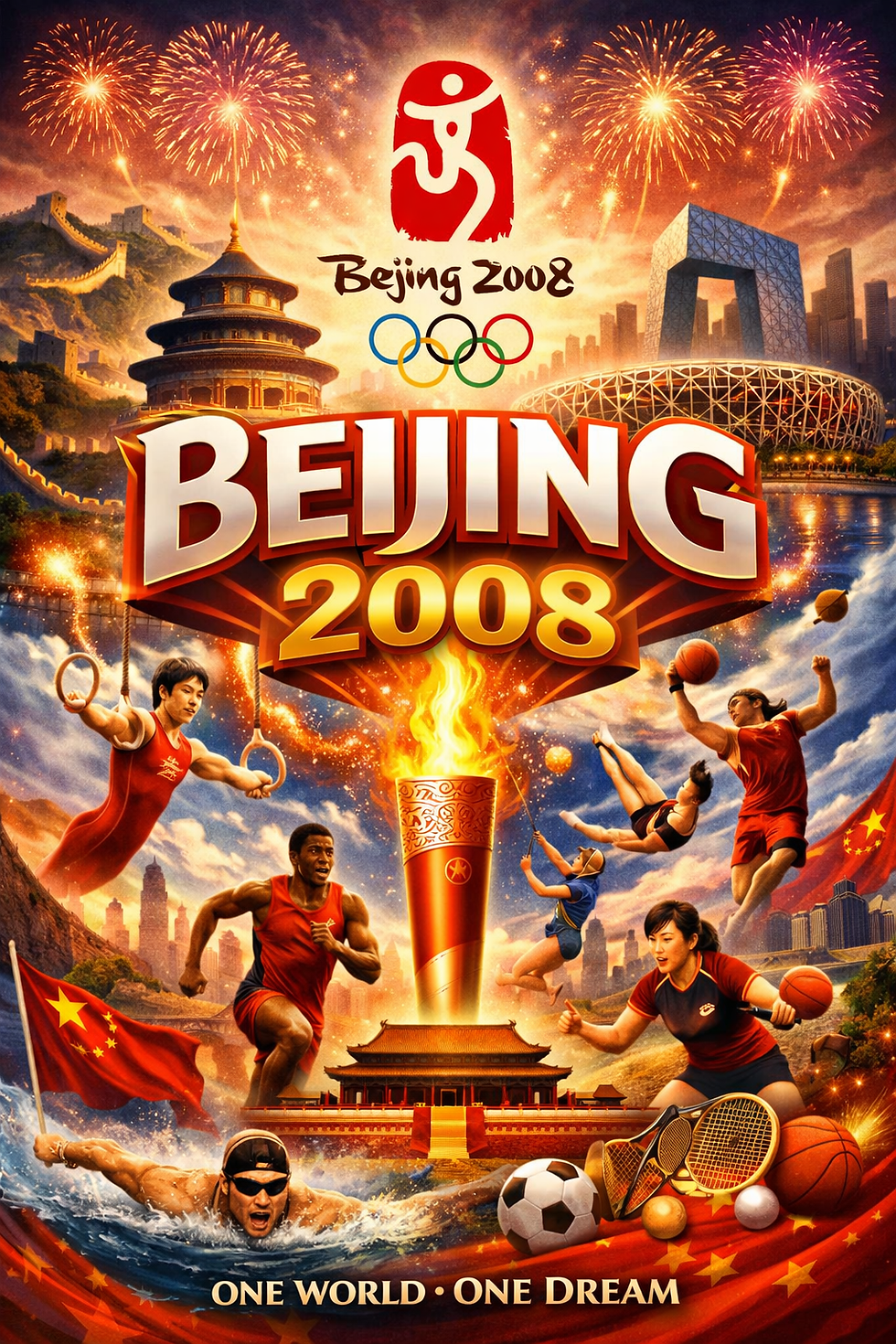
Beijing 2008
Demonstrated state capacity at unprecedented scale. Massive infrastructure investment, urban redesign, and technological integration projected national power.
But beneath the spectacle emerged structural concerns:
Cost opacity
Centralized control
Limited civic participation
The World Cup Expansion Model
FIFA tournaments followed a parallel trajectory:
Larger tournament footprints
Increased host-city requirements
Higher infrastructure expectations
South Africa 2010 represented a major milestone — the first African World Cup — framed as a continental development catalyst.
Outcomes were mixed:
Improved infrastructure and global visibility
But persistent concerns around underutilized venues and uneven economic impact
Brazil 2014 intensified scrutiny:
Public protests over spending priorities
Questions around long-term value
Stadiums disconnected from local demand
The narrative shifted:From pride → to questioning → to resistance.
Digital Transformation Changes the Equation
Industry 4.0 introduced a new layer: data visibility.
Citizens could now see:
Budget overruns in real time
Displacement impacts
Opportunity costs
Social media amplified dissent:
Protest coordination
Public accountability
Global scrutiny
Mega-events were no longer controlled narratives.They became contested public platforms.
The Cost Spiral
From 1996 onward, a structural pattern emerged:
Increasing security requirements
Higher broadcast and technical infrastructure costs
Expanding host expectations from organizing bodies
Competitive bidding inflating commitments
Cities felt pressure to:
Promise more
Build faster
Spend larger
This led to:
Budget overruns
Political backlash
Withdrawal from future bids
Several major cities later declined Olympic bids entirely, citing financial and social risks.
The Legitimacy Crisis
By the late 2010s, mega-events faced a credibility gap.
Citizens asked:
Who benefits?
Who pays?
What remains afterward?
The old narrative — economic stimulus, global prestige — lost persuasive power.
Urban populations increasingly demanded:
Transparent governance
Social return on investment
Environmental accountability
This was not anti-sport sentiment.It was a call for institutional modernization.
Industry 4.0’s Blind Spot: Technology Without Human Alignment
Despite digital advances, this era struggled with one fundamental issue:
Technology outpaced governance.
Cities deployed:
Smart infrastructure
Surveillance systems
Digital ticketing and mobility platforms
But often lacked:
Civic engagement frameworks
Long-term service integration
Equity considerations
Technology improved operations.It did not automatically improve outcomes.
This gap defines the transition to Industry 5.0.
Rio 2016 and Russia 2018: The Inflection Point
Two major events crystallized the shift.
Rio 2016
Delivered iconic imagery and infrastructure — but also:
Fiscal strain
Social displacement
Public dissatisfaction
Russia 2018
Executed with operational precision and technological sophistication. Yet debates centered on:
Political signaling
Governance transparency
Long-term regional benefits
By this stage, mega-events were no longer universally seen as development engines.
They had become strategic gambles.
Lessons for Toronto and 2026 Hosts
Toronto, Vancouver, and North American host cities inherit this legacy moment.
Key realities:
Public scrutiny is higher than ever
Economic promises are no longer taken at face value
Social impact expectations are elevated
The Industry 4.0 era teaches three lessons:
1) Transparency is non-negotiable
Opaque planning erodes trust rapidly.
2) Infrastructure must serve everyday life
Event-only assets undermine legitimacy.
3) Governance matters more than technology
Digital tools cannot compensate for institutional misalignment.
Industry 5.0 Transition: From Spectacle to Systems
The next phase of mega-events must move beyond:
Image
Scale
Broadcast metrics
Toward:
Human outcomes
Resilient infrastructure
Civic legitimacy
Industry 5.0 reframes success metrics:
Not attendance
Not global media reach
But long-term improvements in how cities function for residents
Mega-events must evolve from:performances → to platformsprojects → to systemsmoments → to trajectories
Strategic Implications
Cities entering the 2026 cycle must answer new questions:
How does this event strengthen urban resilience?
How does it support climate adaptation?
How does it expand inclusive economic opportunity?
How does it integrate AI and digital infrastructure responsibly?
If those answers are unclear, the event risks repeating Industry 4.0 patterns — high visibility, uncertain legacy.
Closing Reflection
Between 1996 and 2018, mega-events reached peak globalization — and peak skepticism.
They became:
Bigger
Faster
More technologically advanced
But not always:
Fairer
More sustainable
More aligned with citizens
Industry 5.0 emerges precisely because of this tension.
The next generation of host cities must prove that mega-events can:
Strengthen institutions
Improve everyday urban life
Build resilience across decades
If not, the model will continue to lose legitimacy.
Toronto and its peer cities now stand at that threshold.


Comments