Robotics in Smart Factories by GPT 4o
- Leke

- Jul 11, 2024
- 2 min read
Smart Factories: The Heartbeat of Industry 4.0 Robotics
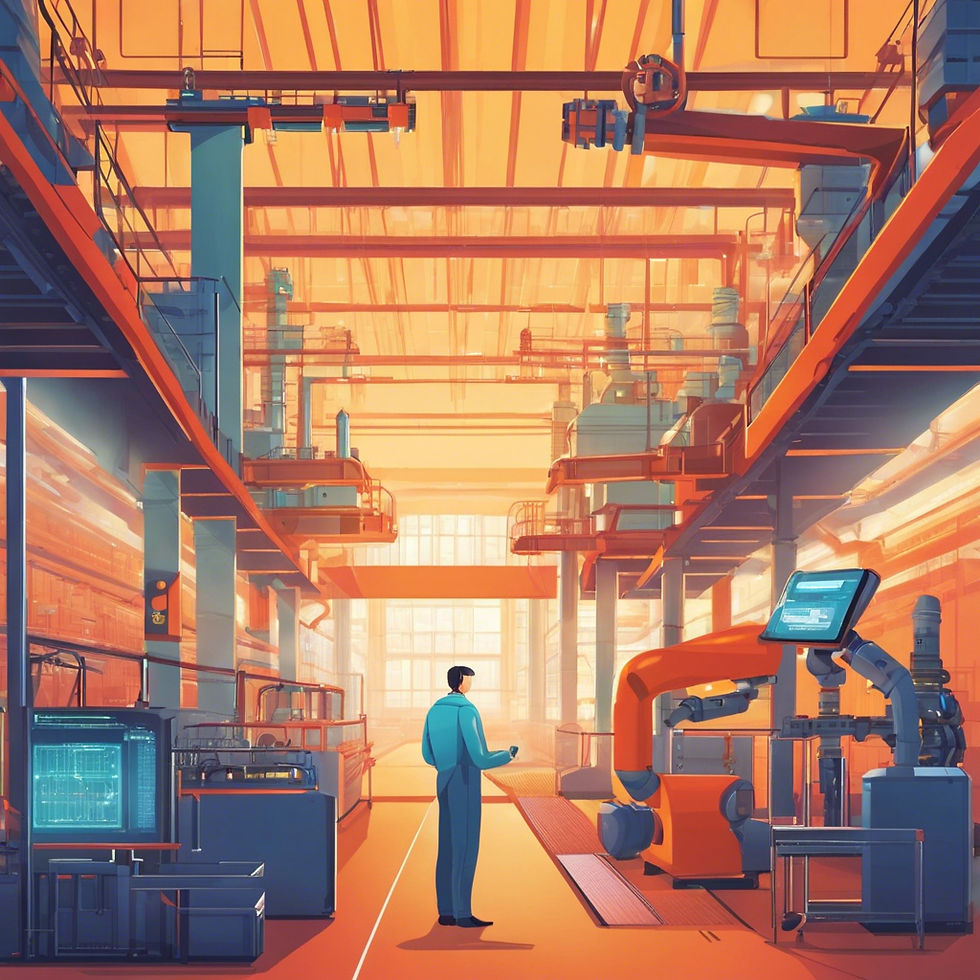
Smart factories represent the epitome of Industry 4.0, where advanced technologies like robotics, IoT, and AI converge to create highly efficient, flexible, and intelligent production environments. In this blog post, we will explore the concept of smart factories, the critical role of robotics within them, and the benefits they offer to modern manufacturing.
What are Smart Factories?
Smart factories are production facilities that leverage advanced technologies to optimize manufacturing processes. These factories are characterized by their interconnected systems, real-time data analytics, and autonomous decision-making capabilities. The integration of robotics, IoT, and AI allows smart factories to operate with high levels of efficiency, flexibility, and precision.
Role of Robotics in Smart Factories
Robots are central to the functioning of smart factories, performing a wide range of tasks that enhance productivity and efficiency:
Automated Production Lines: Robots automate production lines, performing tasks such as assembly, welding, and packaging with high precision and consistency. This automation reduces human error and increases production speed.
Quality Control: Robots equipped with advanced sensors and AI algorithms perform quality inspections, identifying defects and ensuring that products meet stringent quality standards.
Material Handling: Autonomous robots handle materials, transport goods, and manage inventory within the factory. They optimize logistics and reduce the time and effort required for manual handling.
Maintenance: Robots in smart factories can perform predictive maintenance by monitoring equipment conditions and predicting potential failures. This proactive approach minimizes downtime and extends the lifespan of machinery.
Benefits of Smart Factories
Increased Productivity: Smart factories enhance productivity by automating repetitive tasks and optimizing production processes. Robots work tirelessly, leading to higher output and efficiency.
Flexibility: The adaptability of smart factories allows for quick reconfiguration of production lines to accommodate different products and changing market demands.
Cost Savings: Automation and real-time data analytics reduce operational costs by minimizing waste, improving resource utilization, and lowering labor costs.
Enhanced Quality: The precision and consistency of robots in smart factories ensure high-quality products, reducing the likelihood of defects and recalls.
Conclusion
Smart factories, powered by robotics, are the heartbeat of Industry 4.0, driving innovation and efficiency in modern manufacturing. As we continue to explore the potential of these intelligent production environments, their impact on the industry will only grow. In our next blog post, we will delve into the role of robotics in the supply chain, highlighting how robots are streamlining logistics and enhancing supply chain management.


Comments